Harusajin Full Library All Files Link
Begin Now harusajin world-class live feed. Without any fees on our video portal. Get captivated by in a great variety of videos put on display in high definition, a dream come true for high-quality viewing fanatics. With up-to-date media, you’ll always get the latest. Discover harusajin preferred streaming in sharp visuals for a completely immersive journey. Participate in our platform today to enjoy restricted superior videos with no payment needed, no credit card needed. Benefit from continuous additions and navigate a world of rare creative works made for first-class media admirers. Act now to see unique videos—swiftly save now! Enjoy the finest of harusajin singular artist creations with lifelike detail and staff picks.
The angle in any point (or tip) of the star is 36 degrees A symmetrical star is defined as a polygon with five points, each of which is at an identical angle to the others, and ten equal outer sides along its perimeter. If you bisect the angle in any point (split it in half), each angle is 18 degrees.
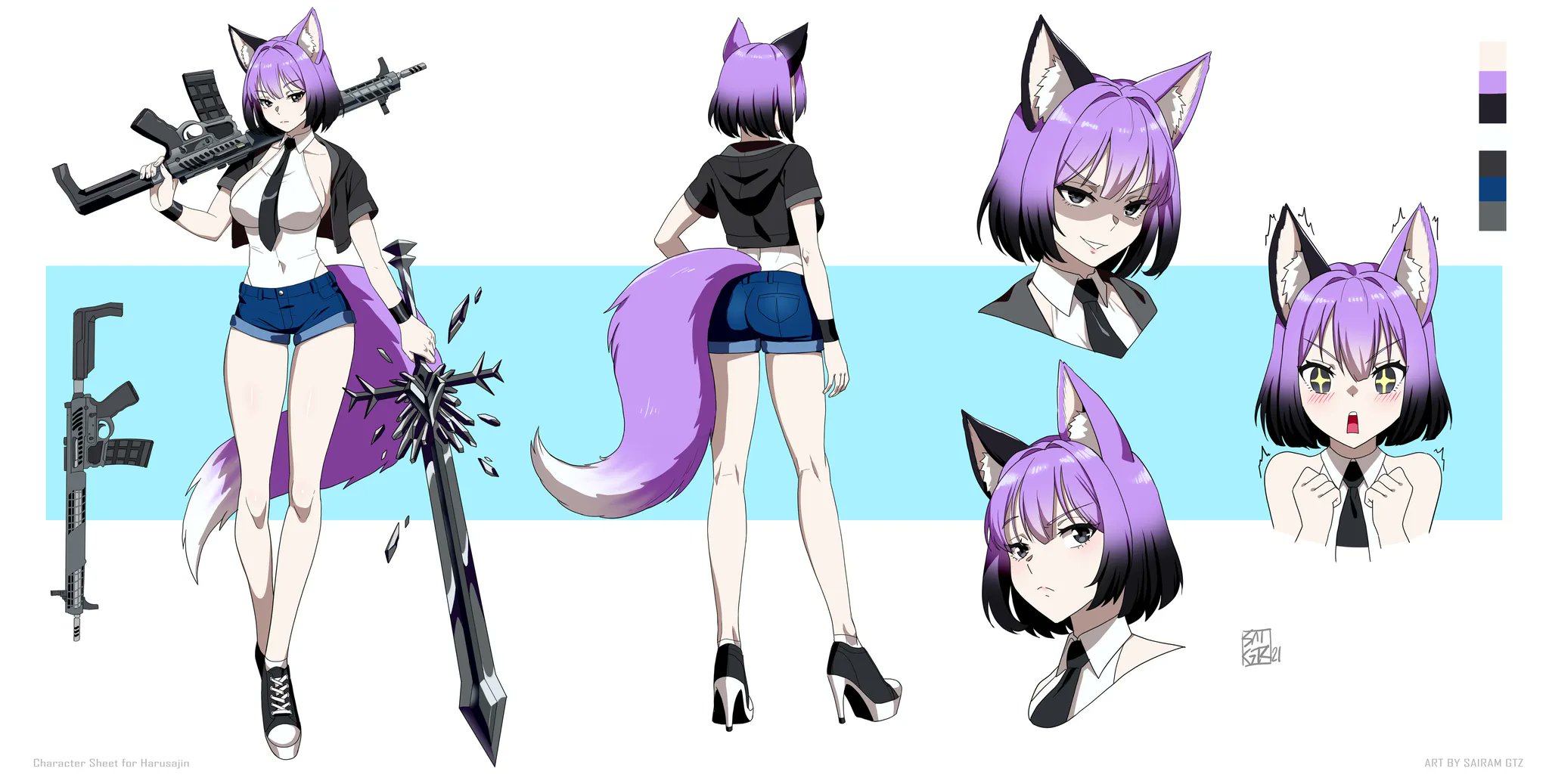
Sai Art on Twitter: "Character sheet commission for @harusajin from
Equiangular means that all the angles lying in the same region are equal. The angle in any point (or tip) of the star is 36 degrees. What 2d shape has 5 sides all equal angles and no lines of symmetry
There is no such shape
A 2d shape with 5 sides and all equal angles must be a regular pentagon (or a. Virtually all of the math we’ve outlined for the five pointed star was referenced for calculating the chestahedron’s spectacular golden ratio measurements and angles. The real question is why stars appear that way at all, since we all know that stars are actually spherical in shape, which is far from the image that we draw of them. Five pointed stars can have points with unique line segment lengths and different angled points, but these are not golden five pointed stars, meaning that their points are not equal to one another.
It is formed from the same 5 points that would be used to draw a convex polygon, but we connect the points in a different order to create the star shape In this case, the vertices we are using are from a regular pentagon (all 5 sides and all 5 angles are equal). Note, this is for a symmetrical star — all 5 points have the same angle, and all 10 outer sides along the perimeter are equal